
Photography by Wentao Guo and Suzumori Architecture
Sushidokoro Mekumi
- Location New York, NY
- Year 2025
- Team Shuji Suzumori, Wentao Guo, Rachel Wei
- Collaborators De Lux Construction, Bolster Furniture, Evan Eisman Company, Art in Construction, Lanoba Design, Jammal Upholstery
Sushidokoro Mekumi originates from Kanazawa, Japan—a city renowned for its culinary heritage and artisanal traditions. In an era when international culinary travel is ubiquitous and the flow of goods increasingly borderless (if sometimes contested), we challenged ourselves to inherit Japanese history and culture while expressing it in a way only possible in New York City. By working primarily with domestic materials and craftspeople, the project became not just about the final result, but about the journey of how the restaurant was designed and built.
Designed in Brooklyn, Made by the USA
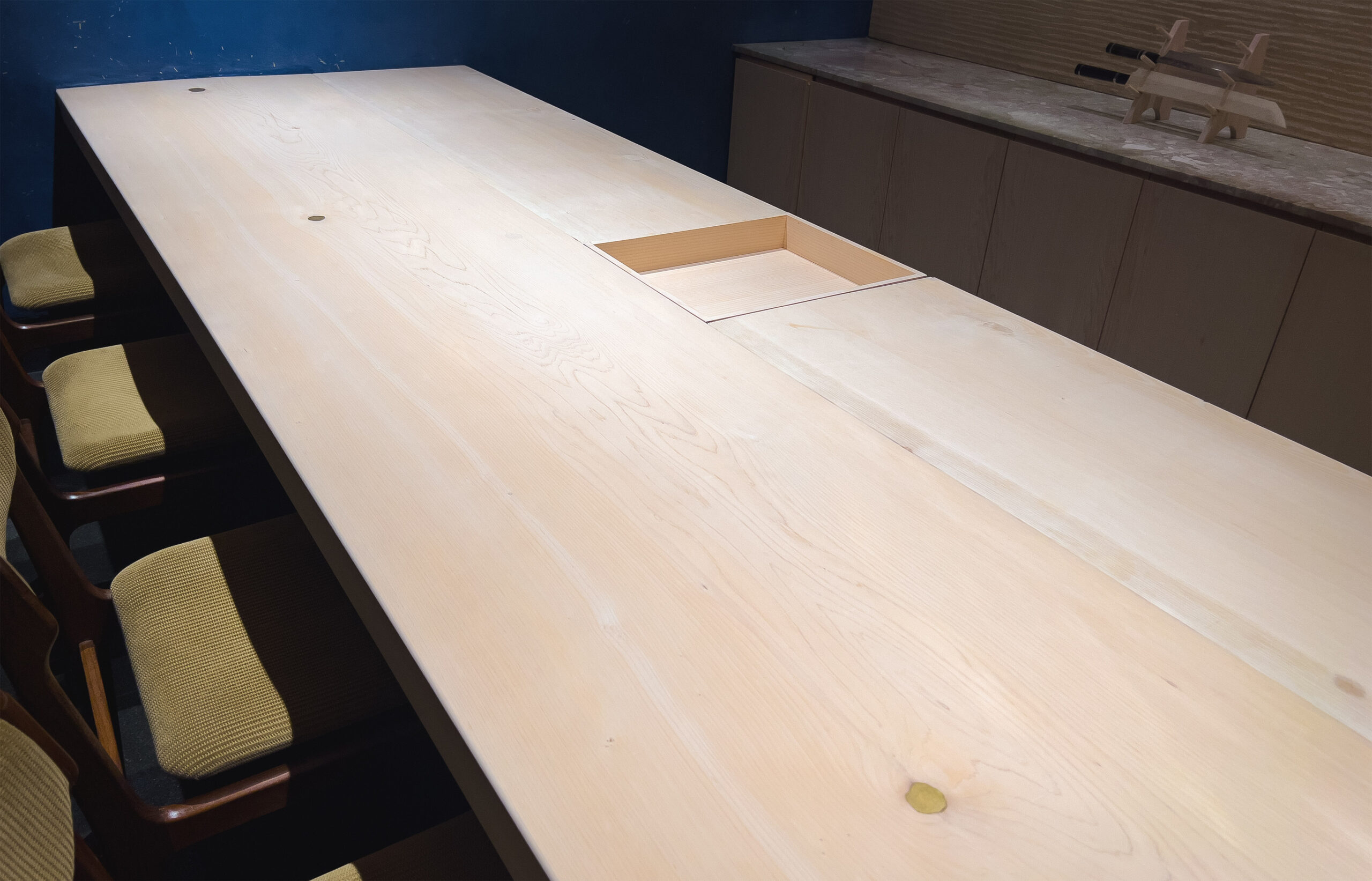
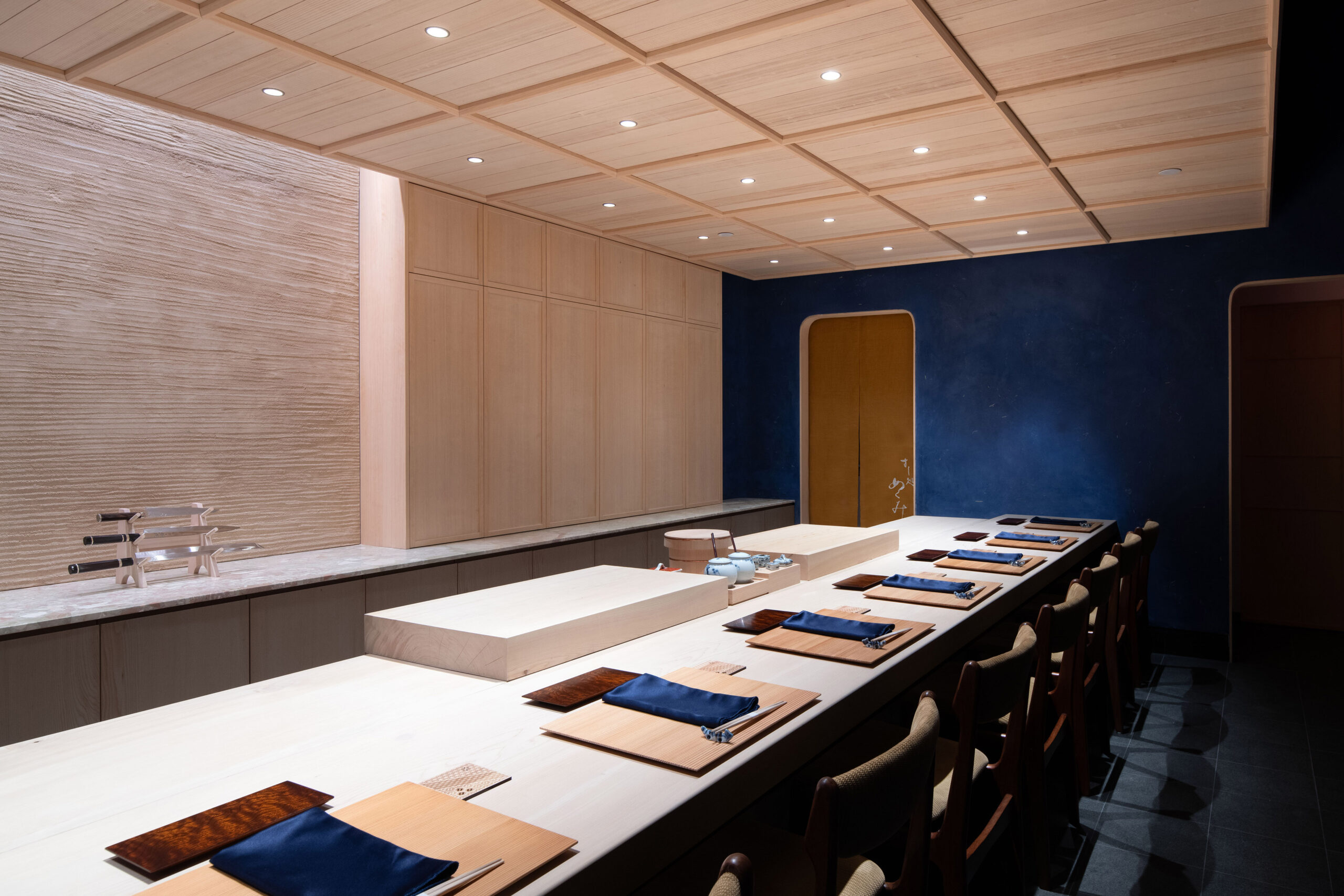
At the heart of a traditional omakase-style sushi restaurant is the wood counter. More..
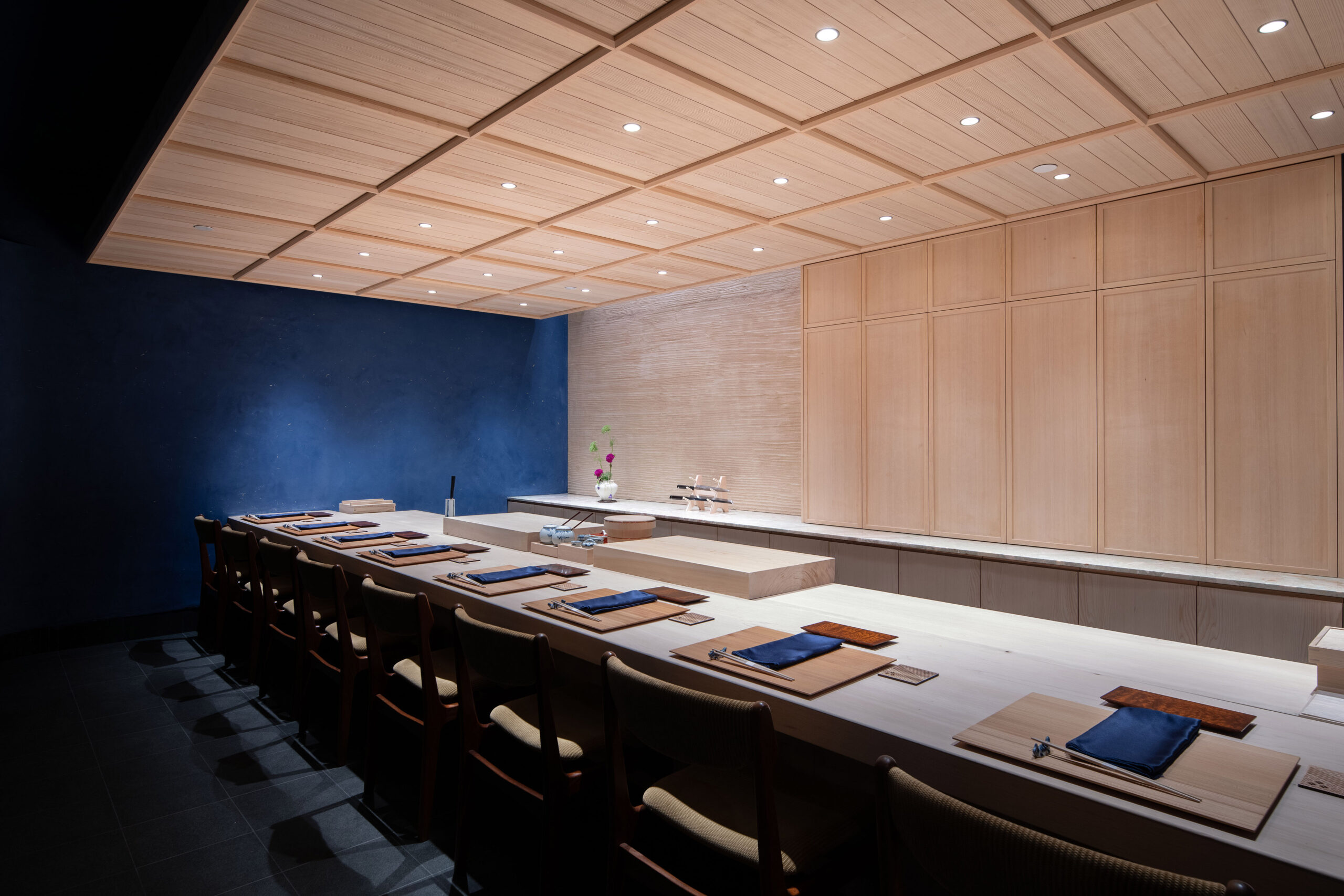
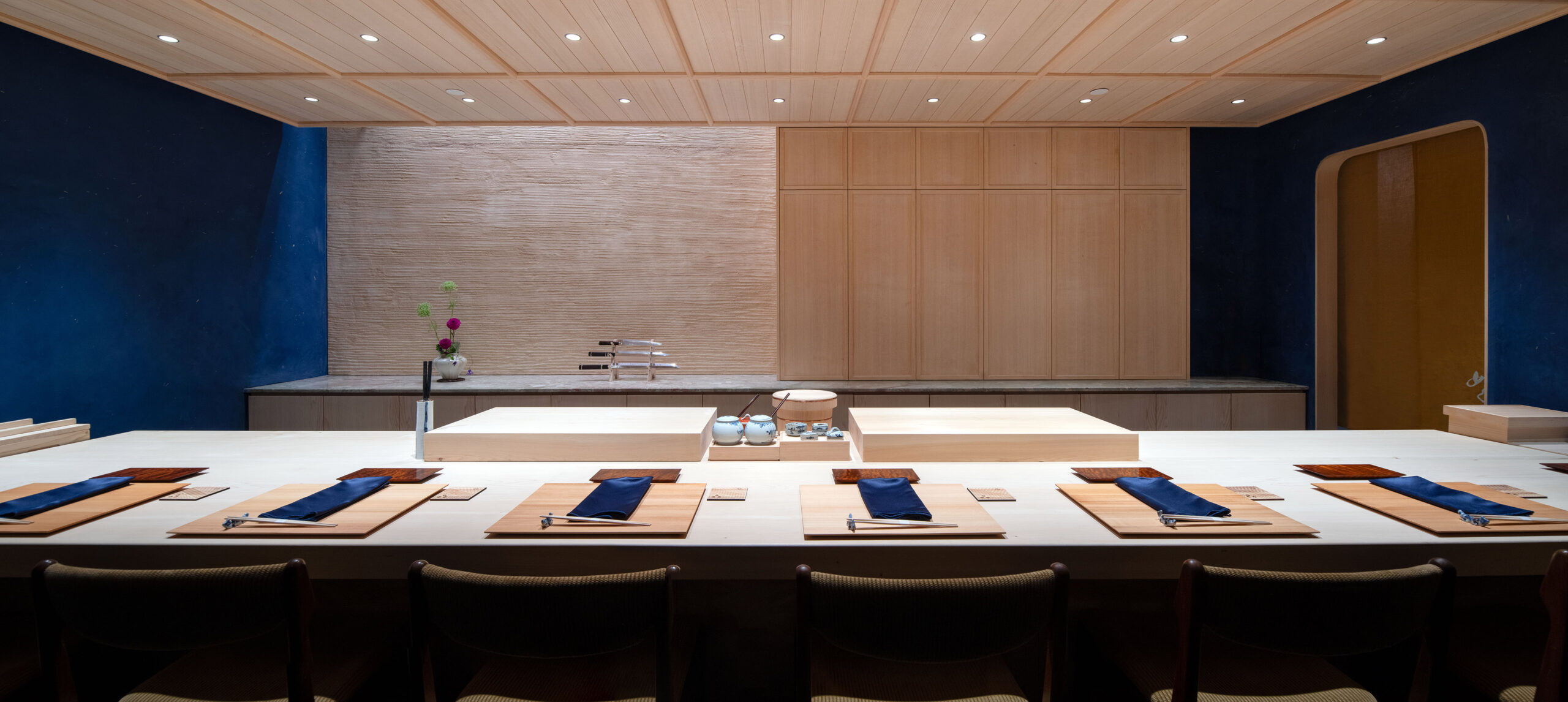
After an extensive search across North America, we discovered Port Orford Cedar, a rare white cedar species native to the Oregon Redwoods, sharing many of Hinoki’s qualities. Unlike Japan, where lumberyards stock Hinoki slabs specifically for sushi counters, acquiring a 20-foot-long, 18-inch-wide single slab required purchasing an entire log directly from Metcalf Lumber. Like a chef composing a menu from the finest available ingredients, this log became the starting point for many design decisions.
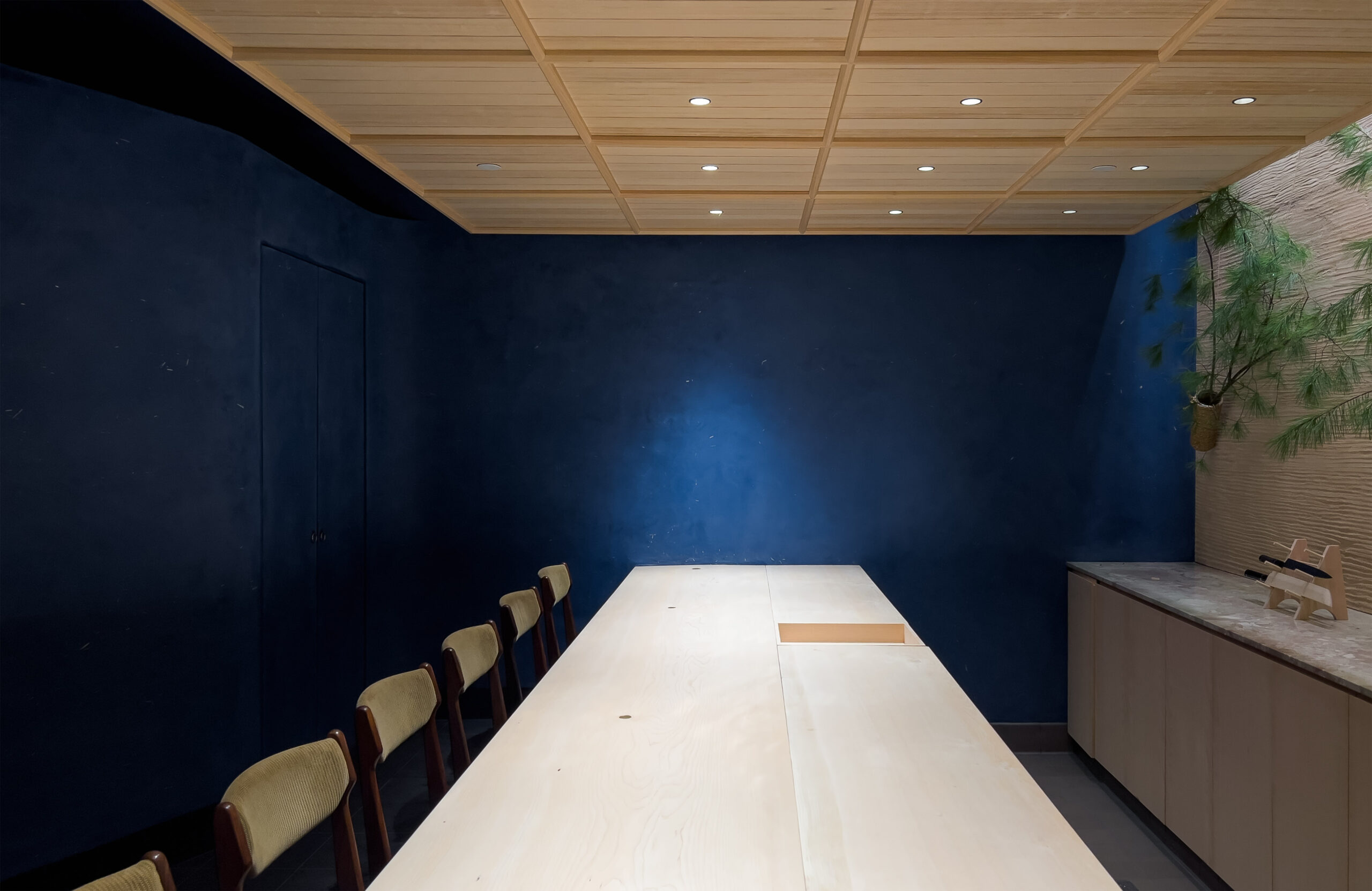
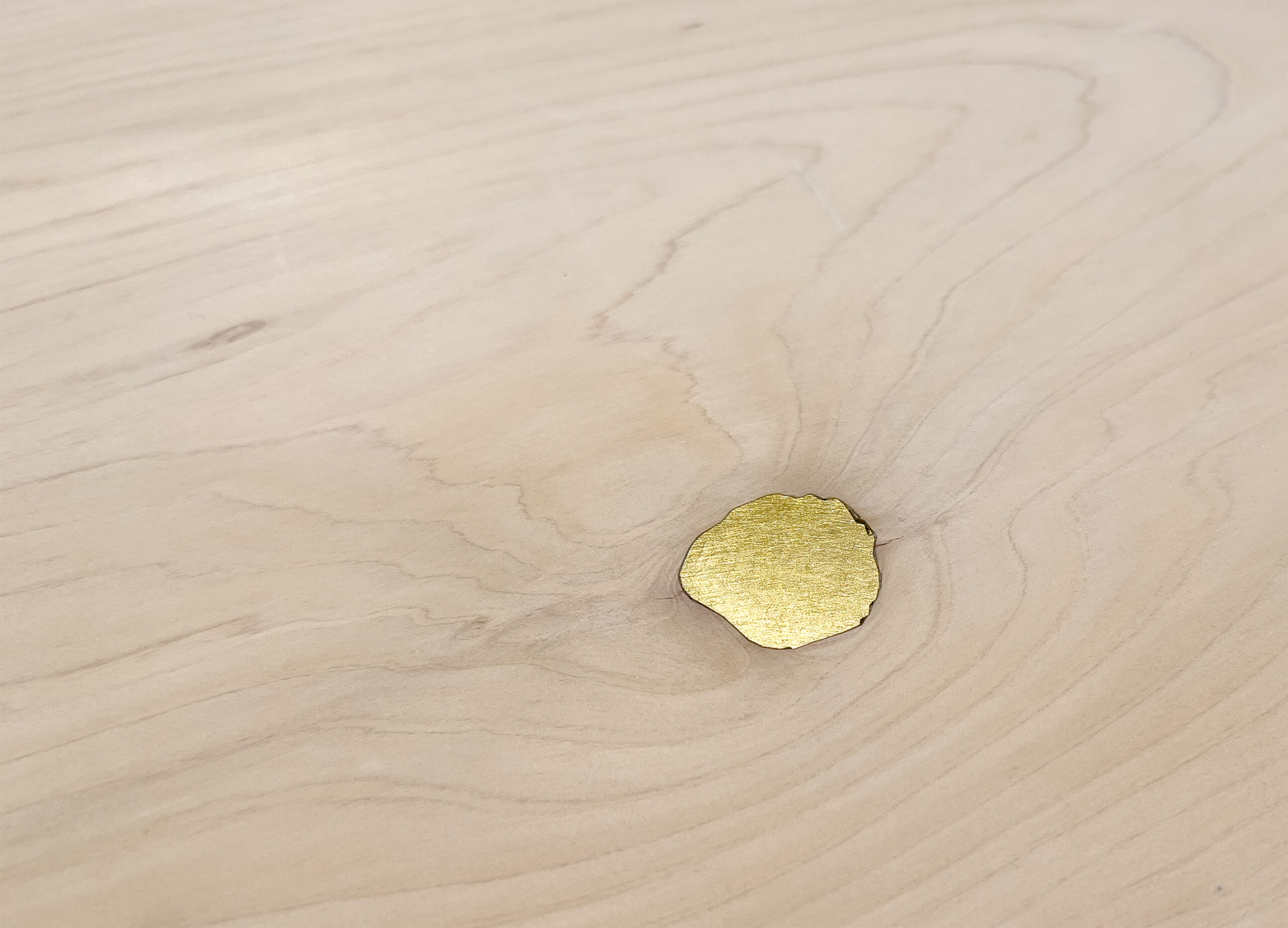
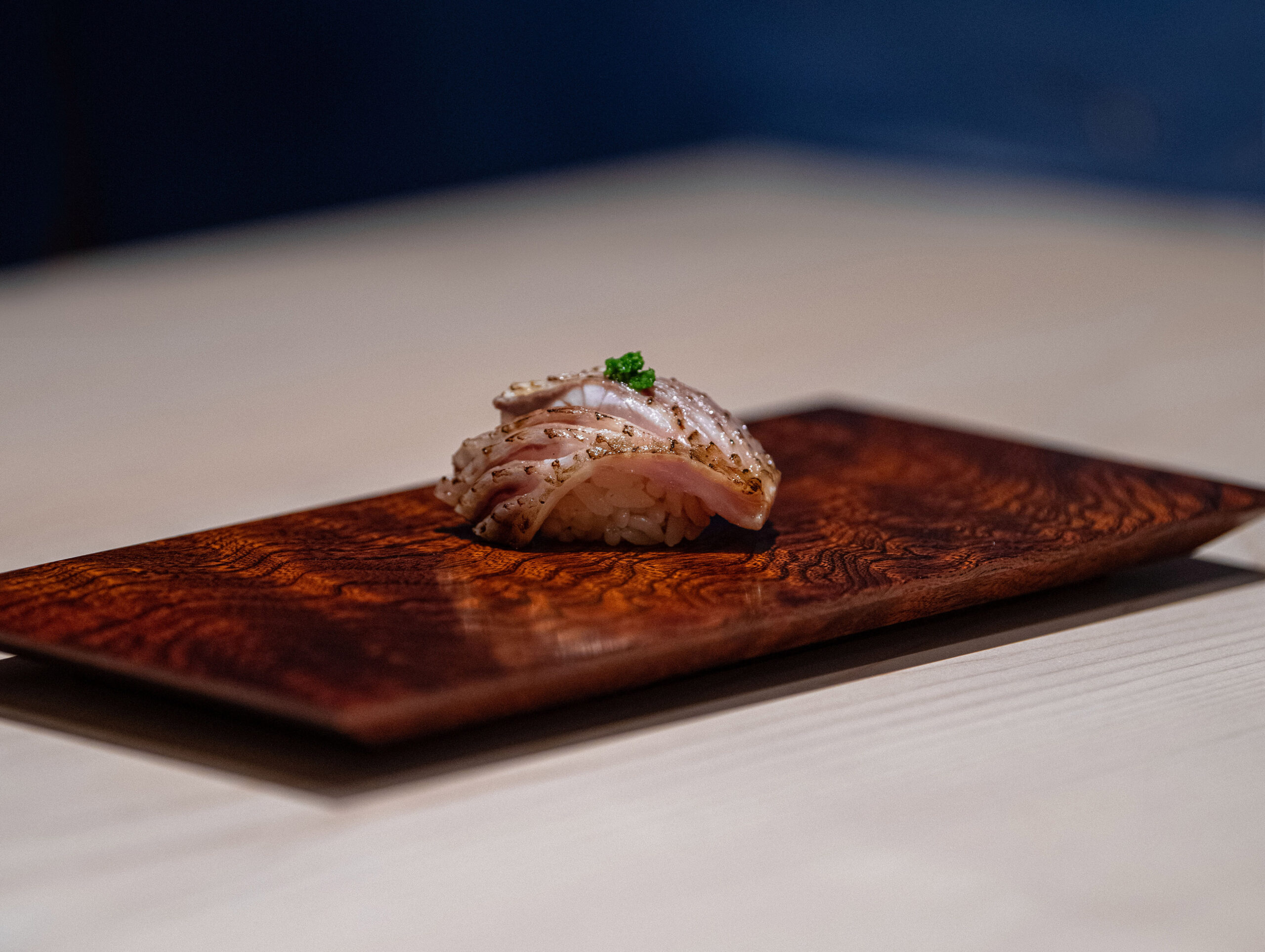
We collaborated with Bolster Furniture in Portland to fabricate the counter. Inspired by kintsugi—the art of repairing ceramics with gold—natural knots in the wood were inlaid with brass, transforming imperfections into features. Shorter slabs became removable cutting boards that align seamlessly with the counter.
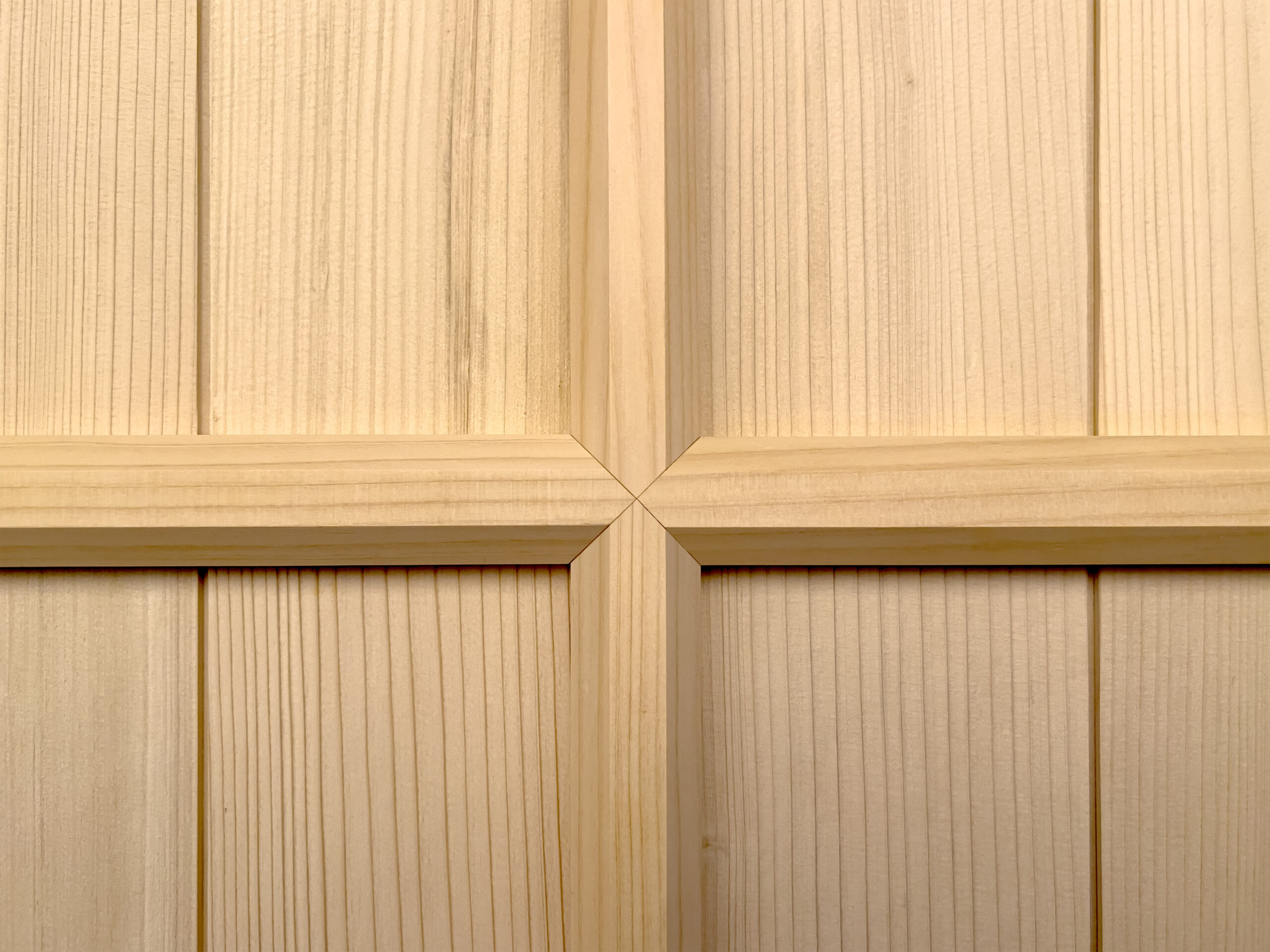
Clear, wide sections were sliced into veneers for cabinetry and doors. Most surfaces were left raw or minimally finished to celebrate the wood’s natural character. Select doors were charred and stained to enhance texture and durability in high-traffic zones.
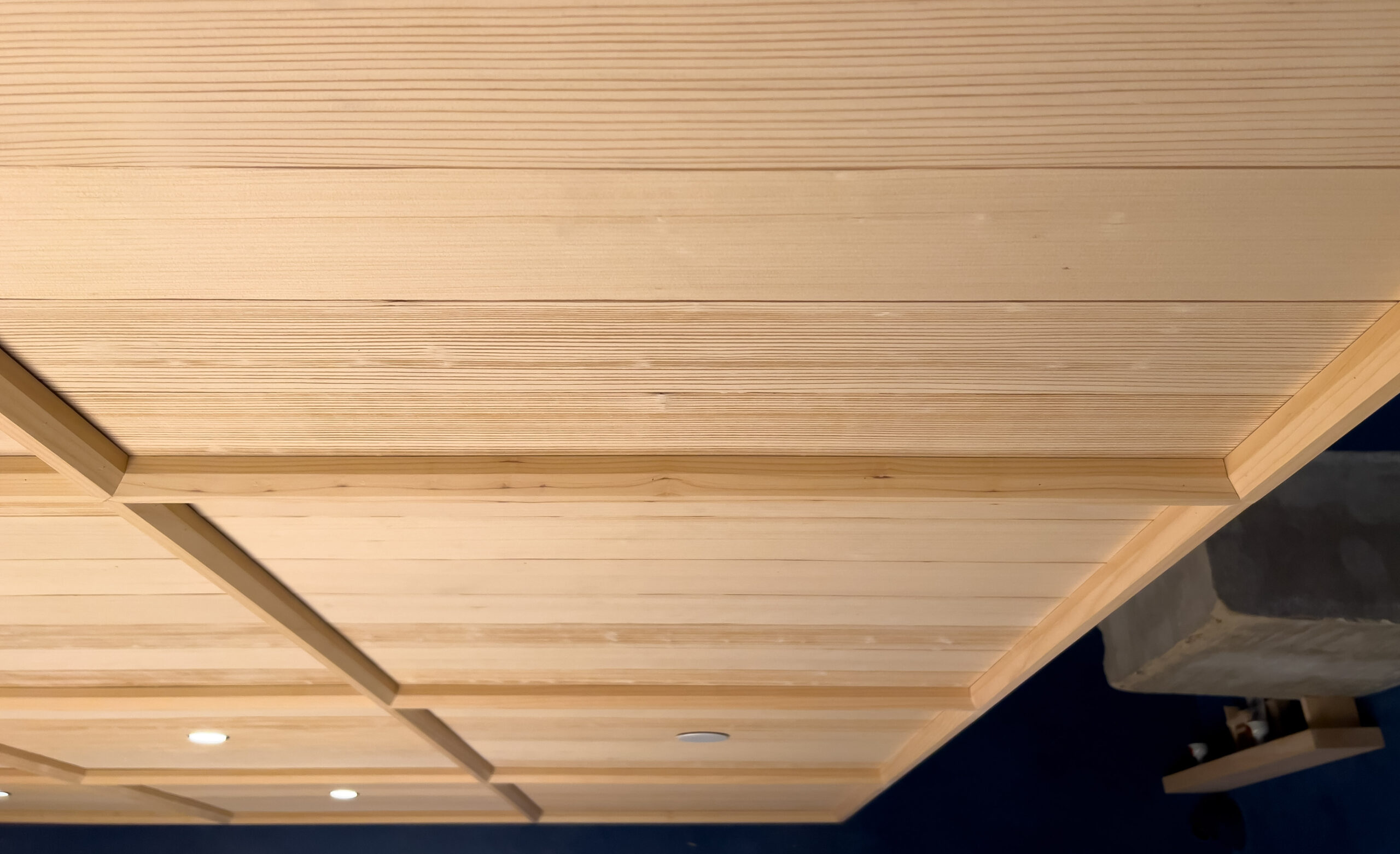
Long, narrow slats were crafted into ceiling panels. Drawing from uzukuri, a traditional technique that emphasizes wood grain through brushing, the panels were sandblasted by Evan Eisman Company in Brooklyn. Their textured surface helps diffuse sound and light, creating a calm atmosphere below.
Smaller remnants were repurposed into shelving and chef’s tools. The log’s heartwood, with its concentric rings, was sliced and assembled into butcher-block panels for the knee wall beneath the counter. This resourceful approach reflects the Japanese philosophy of mottainai—a reverence for materials and a commitment to minimizing waste, often invoked in culinary practice.
Kanazawa Blue
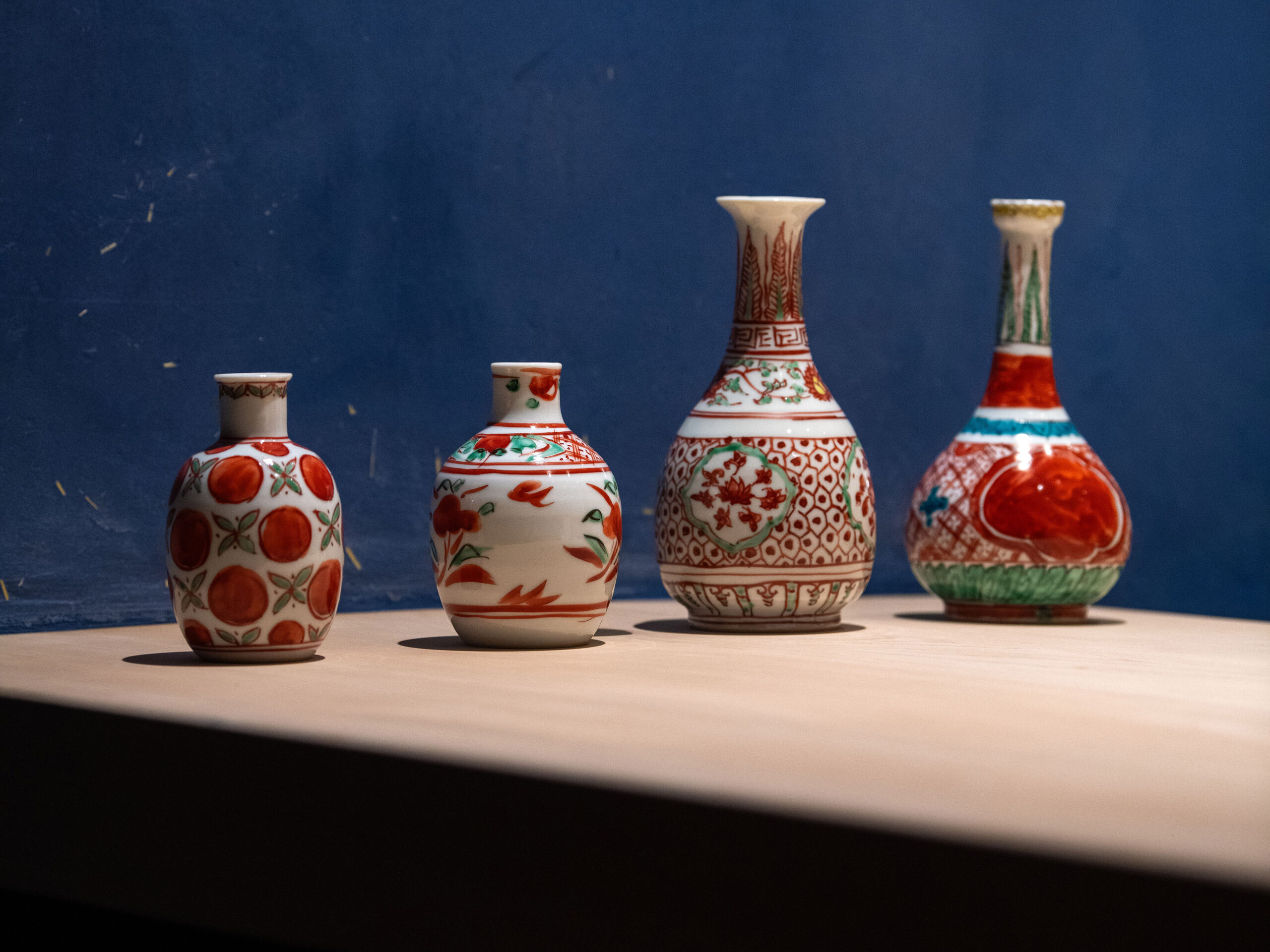
As homage to Kanazawa, the sushi counter room is enveloped in marine blue plaster, a pigment once imported by local shoguns and used in traditional architecture. Paired with a dark granite floor, the vivid blue walls elevate the cedar counter, drawing focus to the chef and their craft.
From NYC to Kanazawa
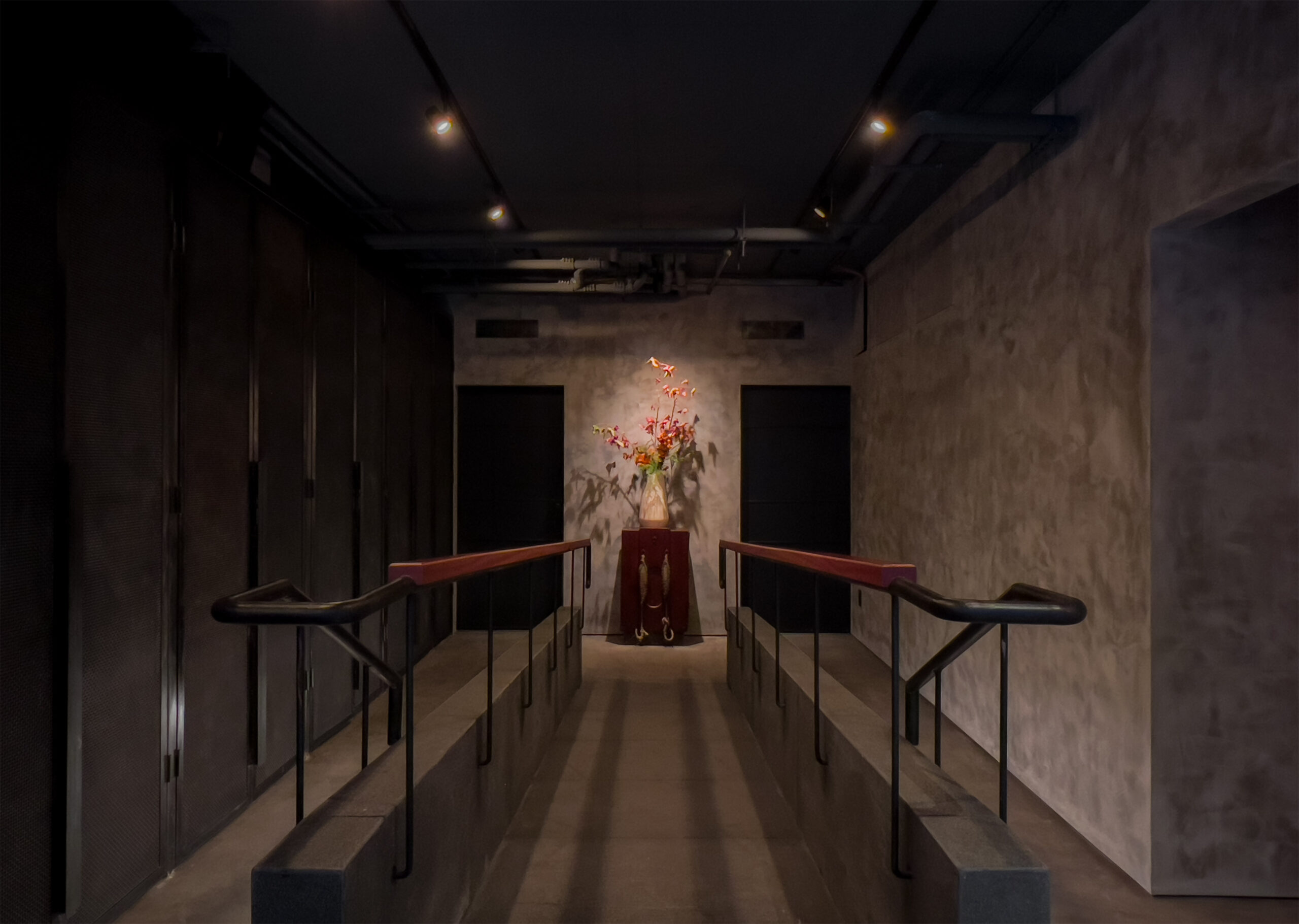
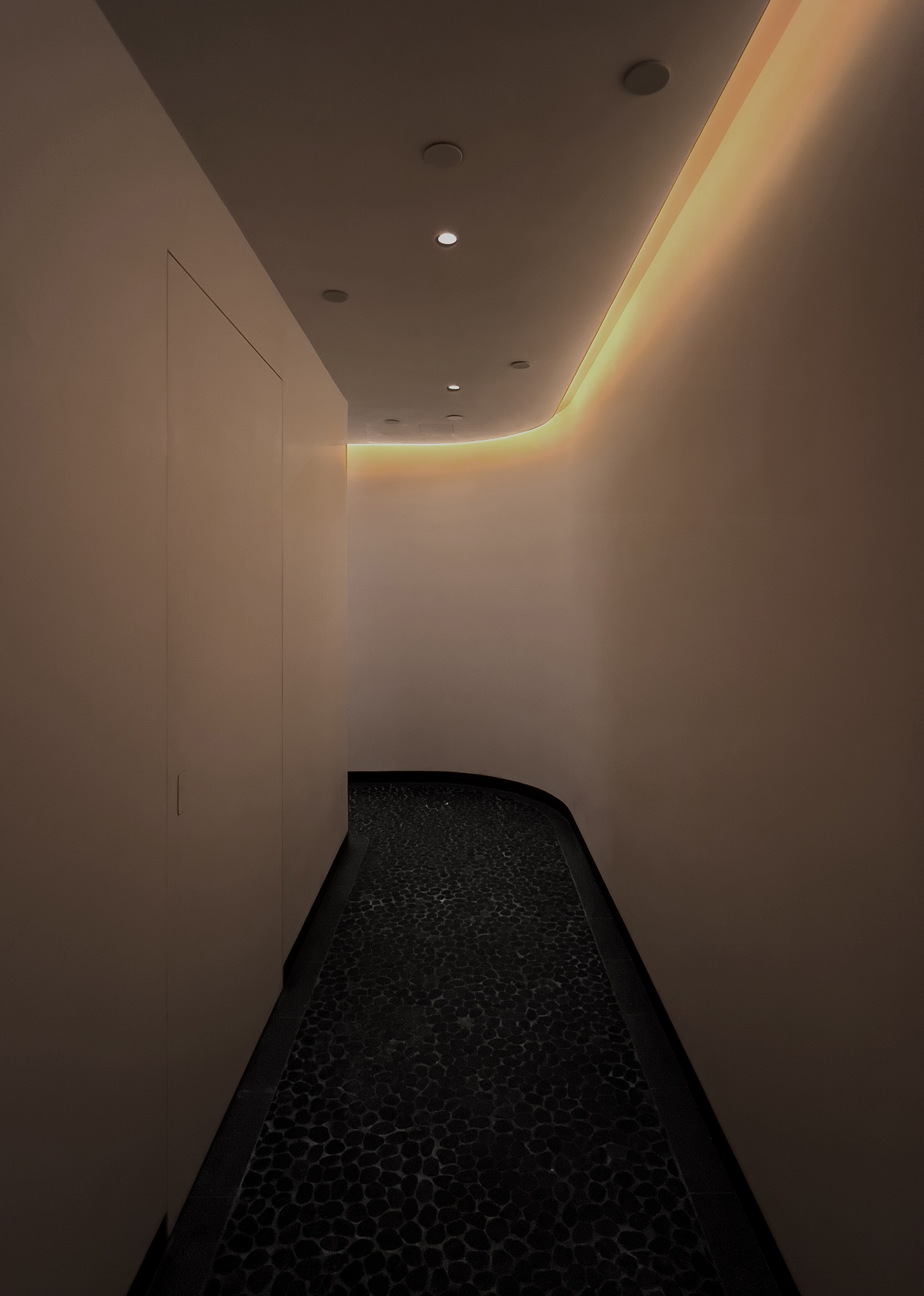
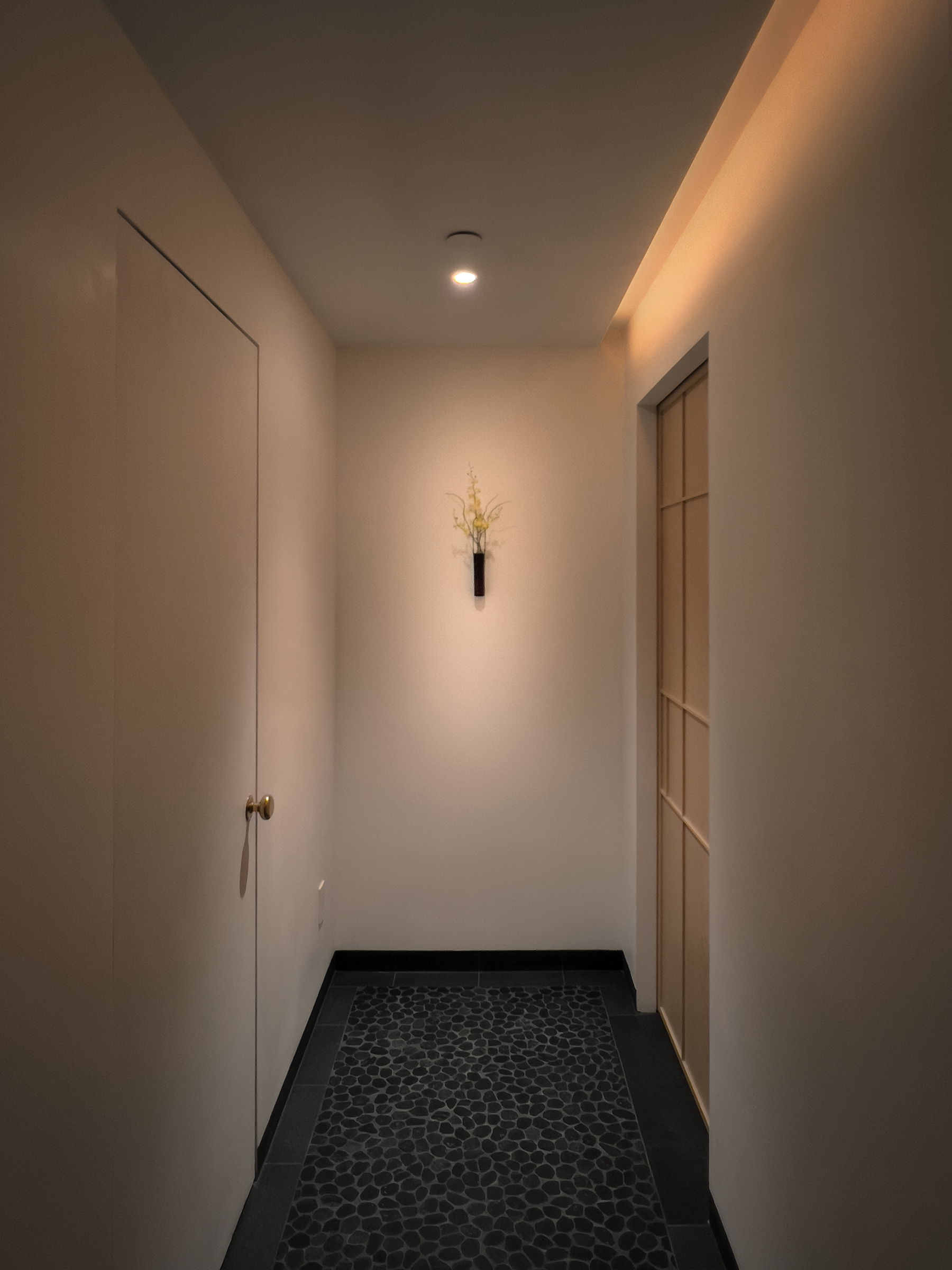
A shared entrance—soon to include a bar—leads to a lobby conceived as an extension of the New York City sidewalk. From here, two paths diverge. A central ramp of textured granite and raw steel, inspired by the wooden bridges of Japanese temples, guides sushi guests across a symbolic threshold—from the everyday to the sublime. Through a charred cedar sliding door, guests enter a pebble-tiled alley, heightening anticipation with each step.